

Taiwan opened a new representative office in Phoenix Monday, expanding its presence in Arizona as Taiwanese semiconductor investment reshapes the state’s economy.
Foreign Minister Lin Chia-lung traveled to Arizona to inaugurate the Taipei Economic and Cultural Office, Reuters reported. Because the United States and Taiwan do not maintain formal diplomatic relations, the office functions as a de facto consulate. It is Taiwan’s 14th representative office in the United States.
The Phoenix office will provide consular services to Taiwanese residents and businesses while promoting cooperation in trade, technology, education and supply chains. It will serve New Mexico, allowing Taiwanese nationals in the Southwest to avoid traveling to Los Angeles for routine assistance.
Lin’s three-day itinerary includes meetings with Democratic Gov. Katie Hobbs and Phoenix Mayor Kate Gallego, along with Taiwanese business and community leaders. He is expected to witness an agreement between Taiwan’s National Innovation and Entrepreneurship Association and the Arizona Commerce Authority.
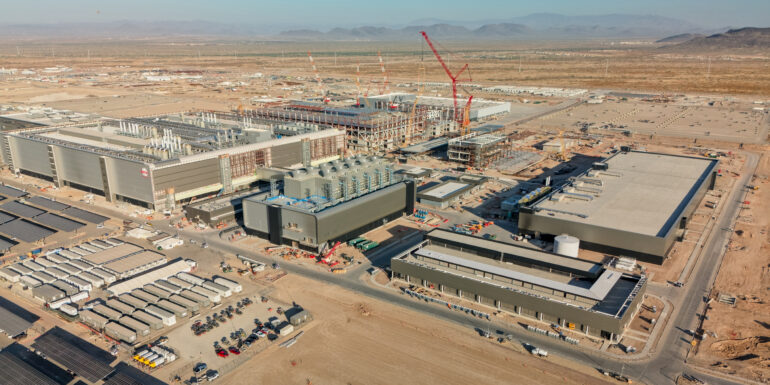
The opening follows Taiwan Semiconductor Manufacturing Company’s rapid Arizona expansion. The chipmaker’s planned $265 billion U.S. investment is centered on its Phoenix-area campus. Its first Arizona plant began mass production in late 2024, a second is expected to begin production in 2027 and another is under construction.

Taiwan became Arizona’s second-largest trading partner in 2025, with $21.2 billion in total trade, according to the Arizona Commerce Authority. A separate Taiwan Trade and Investment Service Center opened in Phoenix in May to support business expansion. The new representative office adds consular and diplomatic functions.
Taiwan’s foreign ministry called the office a milestone in U.S.-Taiwan economic relations. China claims Taiwan as its territory and objects to official contacts between Taipei and Washington. The Phoenix opening does not establish formal diplomatic relations, but it gives Taiwan a permanent government presence near its largest U.S. semiconductor investment.