
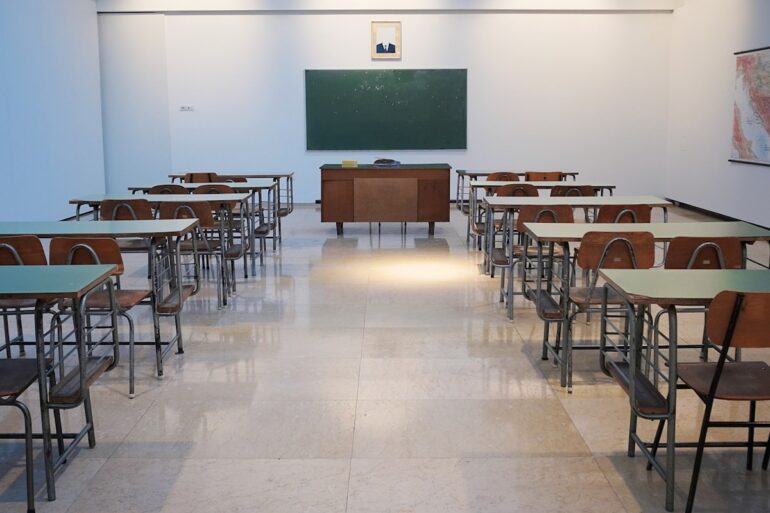

Students at Grand Canyon Unified School District’s Tusayan campus gathered Monday morning for a ribbon-cutting ceremony marking the official opening of a brand-new Science, Technology, Engineering, and Mathematics laboratory, a facility that educators say will transform learning opportunities for children growing up in one of Arizona’s most remote school districts. The $1.2 million lab, funded through a combination of state educational technology grants and generous private donations, features cutting-edge equipment including 3D printers, robotics kits, coding stations, and a digital microscopy system.
District Superintendent Dr. Angela Vasquez presided over the ceremony, joined by students, teachers, parents, and community members who packed the school’s multipurpose room to celebrate the milestone. “Our students deserve every opportunity that their peers in larger communities have,” Dr. Vasquez said. “This STEM lab sends a powerful message that where you grow up doesn’t have to determine the quality of education you receive. Our kids are going to do amazing things with these resources.”
The Grand Canyon Unified School District serves approximately 250 students across its campuses, making it one of the smallest districts in Arizona. The Tusayan campus, which houses students from kindergarten through eighth grade, has long faced challenges associated with geographic isolation and limited funding. The nearest major city, Flagstaff, is nearly 80 miles away, and recruiting and retaining qualified teachers in specialized subjects has been an ongoing struggle for the district.
The new STEM lab aims to address some of these challenges by providing resources that can supplement classroom instruction and connect students with learning opportunities beyond the canyon. The facility includes high-speed internet workstations equipped with video conferencing capability, allowing students to participate in virtual mentorship sessions with scientists, engineers, and researchers from universities and institutions across the country. Dr. Vasquez noted that partnerships have already been established with Northern Arizona University’s College of Engineering and the Lowell Observatory in Flagstaff.
Fifth-grade teacher Sarah Begay, who spearheaded the grant application that secured initial funding for the lab, said she envisions the space becoming a hub for project-based learning that connects STEM concepts to the unique environment surrounding the school. “We live next door to one of the greatest geological classrooms on Earth,” Begay said, gesturing toward the nearby canyon. “Our students can study geology, hydrology, ecology, and environmental science in a way that no other school in the country can. This lab gives them the tools to take that learning to the next level.”
Among the first projects planned for the new lab is a student-led water quality monitoring program that will collect and analyze data from springs and streams within Grand Canyon National Park, conducted in collaboration with the park’s science division. Students will use the lab’s digital microscopy equipment and chemical analysis tools to test water samples and contribute their findings to an ongoing research database maintained by the National Park Service.

The private funding component of the lab came from an unexpected source. Canyon Adventures LLC, a tour company operating in the Grand Canyon region, contributed $300,000 to the project after company founder Richard Chee learned about the district’s aspirations during a chance conversation with a teacher at a local community event. “The kids who grow up here are the future stewards of this incredible place,” Chee said at the ribbon cutting. “Investing in their education is the smartest thing any of us can do.”
Students who attended the opening were visibly excited about the new equipment. Eighth-grader Mia Deloria said she was most eager to work with the robotics kits and had already begun brainstorming ideas for the upcoming Arizona State Robotics Competition. “I’ve been watching videos about robotics for years, but I’ve never had the chance to actually build one,” Deloria said with a wide grin. “This is literally the best day of school ever.” The lab will be fully operational when students return from winter break in January, and the district plans to host community open house events to showcase the facility throughout the spring semester.